
How To Freeze Tomatoes

Filed under: Saving Money — Savvy Housekeeper at 7:26 am on Monday, August 30, 2010

savvyhousekeeping how to freeze tomatoes

One of the great things about growing your own tomatoes is that they can be stored lots of ways. For example, last year I talked about how to sundry tomatoes in your oven. But usually I just freeze the tomatoes in containers. That way, I can pull them out for sauces, soups, or any other dish whenever I want.

Of course, frozen tomatoes aren’t as good as fresh tomatoes–you certainly wouldn’t want them in a salad–but they do have their charm. I know some Italian chefs prefer to work with canned or frozen tomatoes over fresh tomatoes. In any case, you’ve got to do something with the excess harvest from your tomato plants, right?

Here is my method for freezing tomatoes: a. clean the tomatoes, b. remove the skin, and c. put them in a freezer-safe container and freeze. Easy. I don’t bother with pureeing or slicing the tomatoes at this stage because I might want to use whole tomatoes later on. Also, cutting the tomatoes means you are likely to lose some of the juices in the process, which is sad.

How To Freeze Tomatoes

You will need:

    The tomatoes you want to freeze
    Freezer-safe containers, tubs, plastic bags, vacuum-sealer bags, etc.
    1 large pot of boiling water
    1 large bowl of ice water
    Strainer
    A slotted spoon
    A knife


Directions:

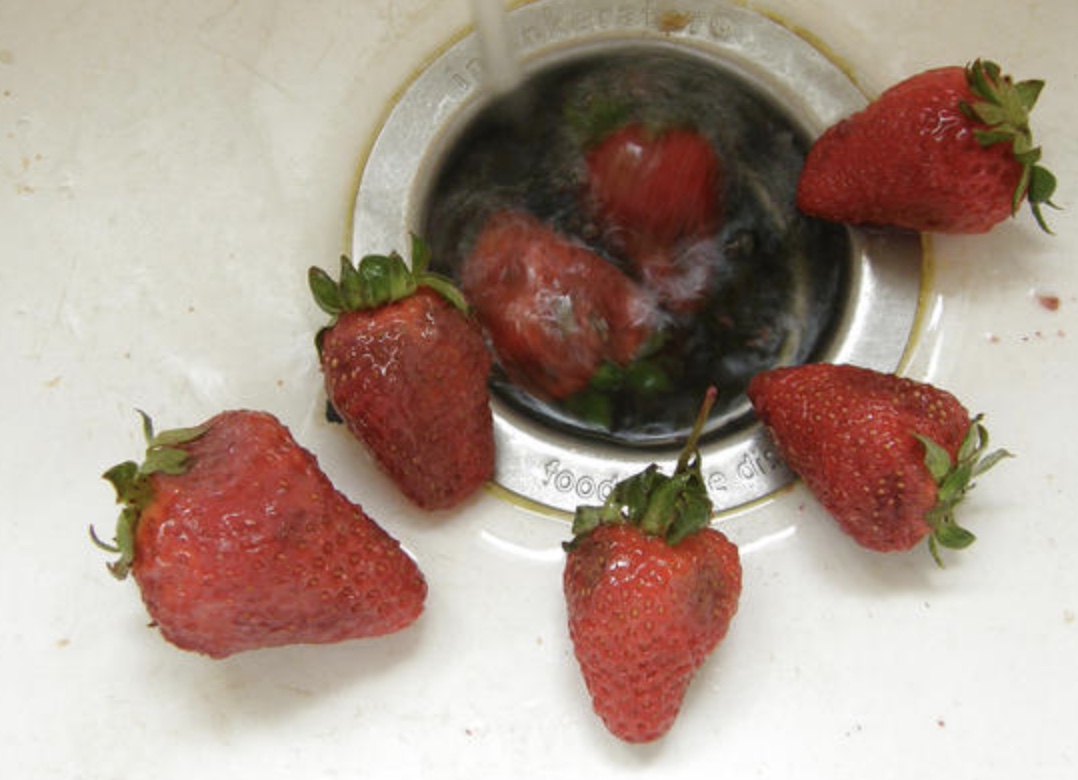
First, prepare the tomatoes. Wash the tomatoes. With a knife, cut out the stem and any bruisings or bad parts of the fruit.

After you are done, it’s time to remove the skins from the tomatoes. Here is a trick to make this easy: get a large pot of boiling water. Beside that, put a bowl of ice water. Drop the tomatoes into the boiling water for 30 seconds-1 minute, then fish out with a slotted spoon. Drop them into the ice bath. When they are cooled, transfer them to the strainer to get off excess water. The skin will come right off. Much easier than a vegetable peeler!

Finally, put the tomatoes into the freezer-safe container. I usually smash them up a bit so they are sitting in their own juices because I find they freeze better that way. Seal the container and transfer to the freezer. Now you can have tomatoes all winter long.

So that’s how I do freeze tomatoes. What’s your method?

101 New Uses for Everyday Things

Filed under: Saving Money — Savvy Housekeeper at 9:22 am on Tuesday, August 3, 2010

savvyhousekeeping 101 New Uses for Everyday Things

Real Simple has a list of 101 New Uses for Everyday Things. It shows you ways to use household basics like coffee filters or lemon juice around the house, thus potentially saving you money in the long run. If cheap vinegar can do it, no need to buy the expensive specialty product for the same job.

Truth be told, there aren’t a ton of new ideas here, but I did pick up a few tips, such as:

Newspaper: Deodorize food containers. Stuff a balled-up piece of newspaper into a lunch box or thermos, seal it, and let sit overnight.

Velcro:
Prevent a jacket or a blouse from gaping open. Sew small pieces of Velcro between the buttons to create a smooth surface.

Vinegar:
Remove stubborn price tags or stickers. Paint them with several coats of vinegar, let the liquid soak in for five minutes, then wipe away the residue.

Vinegar: Kill weeds between cracks in paving stones and sidewalks. Fill a spray bottle with straight vinegar and spray multiple times. (Be careful not to get any on the surrounding grass, as it will kill that too.)

Baking soda and vinegar: Unclog a drain. Pour 1/2 to 1 cup of baking soda down the drain, then slowly pour 1/2 to 1 cup of white vinegar after it. Let sit for five minutes (covered, if possible). Follow with a gallon of boiling water.

I’m going to try that last one next time a drain is clogged instead of buying Draino. If it works, it should save me a little bit of money over time. That said, I’m not convinced all these ideas are worth the trouble. Is it really better to use olive oil to remove make-up when you could buy a $1 bottle of make-up remover, or just use soap? I’m not sure. But the article is worth a read-through, at the very least.

Eating Food After the Expiration Date

Filed under: Saving Money — Savvy Housekeeper at 8:57 am on Wednesday, July 21, 2010

Yesterday, I ate a package of tofu that had an expiration date of June 2010. The reasons I knew the tofu was okay was that it had not been opened before, but had been kept in a vacuum-sealed bag in a very cold part of the fridge. On top of that, the tofu smelled and looked normal. There was no discoloration, strange liquids, smells, shrinkage, or anything out of the norm. So I tossed it in some cornstarch, fried it in some oil, added it to roasted vegetables from the garden, and it was a very tasty dinner.

To me, there’s no sense in throwing food out just because of the expiration date. First of all, most companies guarantee their food for 7-10 days after the expiration date. Secondly, whether or not something is bad has a lot to do with how you handle it. I regularly freeze food and use a vacuum sealer to deprive certain food of oxygen (oxidation is one of the main reasons that food goes bad). I also use my senses–including common sense–and examine the food before I eat it.

And I have never gotten sick by eating food this way.

Which is not to say that there isn’t plenty to be concerned about when dealing with oldish food. There are bacterias that can lurk in food that are difficult to detect and it is always better to throw something out rather than to take a risk with it, especially when dealing with meat or dairy. When in doubt, throw it out, they say.

But that’s different than blindly throwing out food just because it says so on the package. The package date is often wrong and the food is still good. Throwing out perfectly good food is a waste of money.

Now there’s a website called Still Tasty that goes over the shelf life of different food. It has some decent information on there, but I prefer to listen to Christine Bruhn on the topic. Bruhn “is the Director of the Center for Consumer Research at the University of California, Davis where she earned her doctorate” and “has a special interest and passion for safe food handling practices.” In other words, she’s an expert on food handling, and she has recorded a series of videos for Monkey See with information on how to tell whether your food has gone bad or not.

Here is her video on How to Tell if Your Leftovers Have Gone Bad.

Check out the rest of the series for more information on this topic.

Stop Wasting Your Money on These 25 Things

Filed under: Saving Money — Savvy Housekeeper at 7:00 am on Thursday, July 8, 2010

BillShrink has a list of 25 things to stop wasting money on. I agree with all of them except the bit about cutting out all magazines and newspaper subscriptions–online news reporting and feature articles haven’t yet caught up to print in terms of quality and accuracy. However, I would wager everyone is guilty of one of these 25 things.

Read Stop Wasting Your Money on These 25 Things.

Thoughts?

Using Coupons To Eat for $1 A Day

Filed under: Saving Money — Savvy Housekeeper at 7:36 am on Wednesday, June 30, 2010

savvyhousekeeping coupons save on eating grocery shopping

Every so often, daytime TV will have someone on who explains how s/he has worked the coupon system to buy groceries for almost free. Usually there will be a scene where the person checks out with a full cart of groceries and ends up paying some ridiculously low amount, like $3, for the entire shopping thing.

I find this baffling. I do use coupons sometimes, but I generally find them to be more trouble than they are worth. It may save me $.25 to buy the major brand of salad dressing, but I save way more than that by making my own or buying the off-brand, so why bother with the coupons?

But Jeffrey from Grocery Coupon Guide saw the value of coupons. He decided to see if he could eat well on $1 a day using only coupons. He tried it for a month, and boy did it work. He spent $31 on groceries with a retail value of $598. In fact, he bought so much food that he had to donate some of it to a food bank to use it all up. And best of all, he takes you through exactly how he did it.

For example, on the first day shopping, he explains how he managed to spend only $4.49 on:

    2 boxes of Quaker Instant oatmeal
    4 packs of Philadelphia Cream Cheese Minis
    1 package of Knudsen Light sour cream
    10 apples
    2 lbs of carrots
    4 boxes (small) of Wheat Thins
    1 jar of Skippy All Natural peanut butter
    2 cans of pork and beans
    1 bag of long grain brown rice
    2 packages of Mission 100% whole wheat tortillas (10 count each)

And also donate to the food bank:

    15 packs of Philadelphia Cream Cheese Minis
    4 boxes (small) of Wheat Thins
    1 Scrubbing Bubbles Extend-A-Clean bathroom cleaner
    1 Scrubbing Bubbles Extend-A-Clean bathroom cleaner refill

He also explains where he gets the coupons from and how to use them to the best advantage.

I learned a lot reading this blog, and I can see pros and cons of his method.

Pros:

* Obviously you save a lot of money. I mean a lot of money.

* You can get a pretty good range of food from the coupons. Including vegetables.

* Apparently, it is possible to get brand name food for almost free. That is kind of nice to know.

Cons:

* This is a lot of work. You have to print out and organize coupons, do a lot of math in the store, and shop at various stores to get the deals.

* You are at the mercy of the coupons. You only get what they offer, which means you have to buy whatever the deal is and plan your menu around that.

* Most of this food is the sort I avoid the most. That is, food loaded with high-fructose corn syrup and preservatives. I am not sure how healthy it is to eat this way.

* Some of the food looks gross:

That said, I am impressed with this blog. I don’t see eating this way personally–I prefer to garden and cook for my food savings–but it does make me want to give coupons a second look. I mean, this guy is hardcore about grocery savings.

Read Eating Well on $1 a Day.

Thrift Store Find: Paperbacks

Filed under: Saving Money — Savvy Housekeeper at 7:52 am on Tuesday, June 15, 2010

I always look through the books at thrift stores. I often find bestsellers for a fraction of the price that way. I also find a lot of works of classic literature, usually in old paperbacks. For example, I am slowly accumulating a full set of Shakespeare by purchasing the plays at thrift stores.

I love old paperbacks. The older they are, the better. For example, this version of Howard’s End by EM Forster was originally published in 1921 by Knopf.

savvyhousekeeping thrift store finds old paperbacks howard's end 1921

I picked it up for $.30 last weekend, and I think the green cover with the black trees is the bees knees.

I wish I still had my paperback of Days of the Locust by Nathanael West to show you. It might have been an original version of the book–anyway, it had this great modern, abstract cover. Unfortunately, the book fell apart while I was reading it, and no amount of tape could fix it up. I ended up recycling it, and it made me sad, because the book had survived for so many years, and it is such a good book, too.

There are often great things tucked inside these books as well. In a version of Coriolanus by Shakespeare that I have, someone left the top of a plastic bag that held scan-tron test sheets in it, which must have meant that a teacher owned the book. I have also found family photos, receipts, and once, a part of someone’s painting, which the artist ripped up and left inside the book for someone else (me) to find.

savvyhousekeeping thrift store finds old paperbacks far madding crowd thomas hardy

This is a hilarious version of Far From the Madding Crowd by Thomas Hardy. The novel is a classic piece of literature, but the publishers, Signet Book, decided that it would sell better if it was packaged as a steamy romance. On the front, it says, “The romantic classic about a wayward beauty and her scandalous affairs with three dazzled lovers.”

If you have read Far From the Madding Crowd, you know that’s a bit of a stretch. The book is about marriage and love in the English countryside, true, but it’s no Lady Chatterley’s Lover. And then, take a look at the back of the book:

savvyhousekeeping thrift store finds old paperbacks far from madding crowd hardy

SHE WAS A WANTON WHO NEEDED TAMING

savvyhousekeeping thrift store finds old paperbacks peyton's place

This is my favorite thrift store book find. It’s a small paperback that has been studiously covered with prim lavender wrapping paper. Why?

savvyhousekeeping thrift store finds old paperbacks peyton's place

It’s the scandalous book from 1956, Peyton’s Place by Grace Metalious, about sex and other bad things in a small American town. The original owner probably covered this book so that she could read it in public without anyone knowing what she was doing.

I love to imagine this woman carefully lining the book and carrying it around with her so she could read it on the bus or at her lunch break without any shame. Or maybe she just did that to all her books. Who knows?

5 Ways to Entertain On A Dime

Filed under: Saving Money — Savvy Housekeeper at 8:22 am on Friday, May 14, 2010

Someone recently told me that she would like to entertain like I do, but she “can’t afford it.” This annoyed me. It seems to me that a lot of people neglect making friends or getting to know their neighbors because of excuses like “it costs money.” But of course it costs very little to entertain, since conversation is free.

Unless you know materialistic jerks–in which case I recommend finding some new friends–most people want to spend time with you, not be wowed by how much money you spend on them. So while it does cost a fair amount to throw a big party, entertaining, i.e. inviting people over to your house to hang out, doesn’t cost much at all.

When you entertain, it’s good to have a. some kind of snack like a bag of chips and salsa or cookies you made yourself or a nice cheese etc. and b. some kind of beverage, alcoholic or not, depending on how you roll. You don’t have to have the snack, but the beverage is pretty important and I don’t recommend skipping it. Usually your guests will bring the wine or beer or a snack too, so really between making your own food, take-out pizza that everyone chips in on, $2 bottles of wine, making your own beer, and what-have-you, it is completely possible to have a fun-filled evening for under $10. You just have to be creative and again, avoid materialistic jerks.

Here are 5 Ways to Entertain On A Dime:

1. Dinner parties–If you know how to cook, and how to save money on your food bill, it does not cost that much to have a dinner party. Here’s a dish that cost me $2.32 to make, here’s one that cost $2.65, here’s one for $.92. Of course, it will cost a bit more because you have to have more food for more people, but you get the idea. Have the friends bring the wine or dessert (if they offer, of course, but they always do).

2. Potluck–Even better, don’t provide the food. Have everyone bring a dish and you all eat it together. This will cost you the price of one dish and beverages.

3. Movie night–Pick a theme, horror movies or classic film noir, for example, and invite people over to watch some movies. Put out chips and some soda/beer, rent the movies, and you’re talking $20 max. I’ve been doing this one since 7th grade.

4. Fondue–Get a fondue pot from the thrift store. I guarantee one will be there and it will cost you around $5. Then get some cheese to melt in it and cut up an assortment of snacks like apples, bread, pretzels, etc. Invite your friends over for some 1970s retro fun.

5. Board game night–Have people over to play games like Scrabble, Trivial Pursuit, and Scattergories. Since everyone has some of these games in a closet somewhere, this will cost you almost nothing. I used to do this all the time when I was really broke. It was always a hit.

So there are a few ideas off the top of my head. How do you entertain on the cheap?

Make Your Own Padded Envelopes

Filed under: Saving Money — Savvy Housekeeper at 8:24 am on Thursday, April 22, 2010

savvyhousekeeping make your own padded bubble envelope

I often have to mail things with padded envelopes. Usually, I re-use a bubble envelope someone sent me by tearing off the labels and taping them up. It’s a little ghetto, but it works fine. However, every once in awhile I still shell out money for a pack of padded envelops because it never occurred to me before to make my own.

It turns out that there are several tutorials online for making your own padded envelopes, including this one from SwirlyThoughts and this one from 27 Things. Apparently. all it takes is glue/tape, paper, and bubble wrap.

The advantages to making your own padded envelopes is that a. you can make them any size you want, b. they cost less if you re-use paper and bubble wrap (I always have bubble wrap lying around, for some reason), and c. you can use any paper you want, which adds a decorative flair to your envelope.

savvyhousekeeping make your own bubble padded envelope

Good to know.

5 Ways To Save Money On Paper Towels

Filed under: Saving Money — Savvy Housekeeper at 8:54 am on Friday, March 26, 2010

savvyhousekeeping saving money on paper towels
(Image courtesy Otakuchick)

I can’t believe no one has invented a paper towel dispenser that lets you cut off exactly the amount of paper towel you want. Here is how it would work: the dispenser would let you pull out any amount of paper towel, which you would cut with a paper cutter just like you do for butcher paper.

There is a free idea for any of your inventors out there. I will be your first customer.

Paper towels are useful. They serve certain functions that dish rags don’t. For example, I would rather wipe my mouth with a paper towel than a dish rag. I don’t like cleaning a toilet with a dish rag because afterwards, I have this icky rag I have to contend with. I would rather throw away a used paper towel and be done with it.

However, there’s no doubt that paper towels are expensive and bad for the environment. To balance these two issues, I have adopted a system that prolongs the life of my paper towels. As a result, I only buy them once or twice a year.

Here is five tips for saving money on paper towels:

1. Whenever Possible, Use Cloth. Although nothing beats a paper towel for certain circumstances, for most others, dish rags work great. To determine this yourself, try going without paper towels for a week or two and see when you really miss them. Then make a rule to use paper towels only in those situations, and use dish rags the rest of the time.

Incidentally, I don’t buy dish rags, I cut up old clothes or use old washcloths instead.

2. Price Compare. Buying paper towels is surprisingly complicated. There are different numbers of rolls in a package and different amounts of square feet on every roll, so the cheapest price may not be the best deal. The best way to determine what to buy is to compare apples to apples based on the price per square foot. To do this, divide the price by the number of square feet listed on the package. So if a 100 square foot package of paper towels is $5, you would divide $5 by 100 and end up with $.05 per square foot. If you do that with the different packages–the cheapest ones versus the ones on sale, and so on–you will find the lowest price per square foot of paper towel. That is the one to buy.

BUT buying the cheapest brand can backfire. It is true that very cheap paper towels (Walmart’s brand, for example) don’t absorb well, which means you end up using more of them, going through the roll faster, and losing the money you thought you were saving by buying the cheapest price per square foot. Consumer Reports did an test on paper towels and found that Bounty Extra Soft, Walgreens Ultra Quilted, CVS Big Quilts, Kirkland Signature from Costco (which is what I usually use), and Up & Up from Target had the best absorbency. I generally believe in buying the cheapest roll of paper towels unless a brand has proven itself to be bad.

3. Re-Use Paper Towels. Weirdly enough, most paper towels get used at least twice in my house. I find that most paper towels are capable of several uses before they are spent, so after dinner, I snag the paper towels from the table and toss them in a container to re-use. I will re-use a paper towel before I get out a clean dish rag. I figure this saves a little bit of money because dish rags cost money to wash and the paper towel is going into the garbage either way.

If you re-use paper towels, make sure to be sanitary. I re-use paper towels for cleaning only. I would never wipe my mouth with one.

4. Use Smaller Pieces. I have a friend who likes Bounty Select-a-Size paper towels, which lets you tear off smaller pieces of paper towel. She says one roll of that lasts her 2 months. I haven’t done the price comparison on this, but she had a convincing point. Other people cut rolls in half to force themselves to use less. Or you could just tear off smaller pieces.

5. Use Other Alternatives. I recently learned that you can use paper bags to absorb bacon grease. I always have small paper bags around from the store, so I’m going to try this next time I cook bacon. Another common paper towel alternative is to use newspaper to clean windows. I don’t do that, but some people swear by it. I have also heard of people using paper napkins to clean instead of paper towels since they are (supposedly) cheaper. I think your absorbency issue would come to play here–napkins don’t absorb as well, so you would use more of them. Anyway, the point is, examine every use and look for alternatives. There are a surprising number of them when you start looking around.

How do you save money on paper towels?

5 Ways To Battle Frugal Fatigue

Filed under: Saving Money — Savvy Housekeeper at 9:36 am on Tuesday, March 9, 2010

If your New Year’s Resolution was to be more frugal in 2010, like many of us, you may be getting sick of it by now. There are good reasons for this. Being frugal is an exercise in discipline–telling yourself no over and over again for the benefit of a larger goal. This routine can become oppressive over time and lead to a sense of malaise, listlessness, and mild depression. There is a name for this phenomenon. It’s called frugal fatigue.

Frugal fatigue just means you’re tired of being thrifty. You want to have some fun and spend some money instead of always saying no to yourself. But experiencing this temporary emotional state doesn’t mean you have to fall off the frugal wagon completely. It just means that you have to acknowledge and deal with the feelings so that you can get on with being thrifty. Here are five ways I have found to battle frugal fatigue:

1. Remember Your Goals. It helps to reassess why you are doing this in the first place. Look at the positives, not what you can’t do–go out to dinner, go shopping, buy a new car, etc.–but what you will be able to do because of this lifestyle–save for retirement, go on a trip, pay off your debt (which, while unglamorous, means more freedom in your life). Look at what you have achieved so far and what you will achieve if you keep on with this.

2. Try Something New. Frugal fatigue comes from routine. You end up feeling trapped in your house and like you aren’t allowed to do anything. So, try something new. Cook a new recipe, try a new sport, go thrift store shopping with a tight budget, or have friends over for board game night. Make some fun for yourself that doesn’t focus on spending a lot of money, and you will feel better.

3. Get Some Frugal Inspiration. I just read the book Possum Living by Dolly Freed–who I recently posted a short documentary on–and it got me all gung-ho about self-sufficiency again. It’s important to have things like that. Read some frugal forums or The Tightwad Gazette or stare at growing your savings account or talk to your favorite frugal friend. Do something to get excited about frugality and it will feel more fun.

4. Count Your Blessings. You could just think about all the things you have in life, or you could literally count your blessings–for example, open your refrigerator and look at all the food you have, and then make a plan on how you’re going to use it up. Or look at all the paint cans in the garage and make a new project around them. The idea is to focus on what you have, the blessings, and then use them. Why? Using your resources makes you feel richer.

5. Buy Something. If frugal fatigue is really bad, go out and do something that costs money. That’s right. Treat yourself. Unless you are desperately poor, you can probably afford to go out to one dinner or buy yourself one item at the store. This could backfire and reignite your love of spending, but I’m guessing that if you have been wanting to do something for awhile and you’ve been telling yourself no, doing it will be enough to keep frugal fatigue at bay. Any discipline system needs small rewards as much as the big ones to keep you motivated. If you have been doing well, maybe it’s time for one of those small rewards.

Besides, it is cheaper in the long run to do something you really want and then go back to frugality than it is to fall off the wagon altogether because you feel discouraged. So, unless your goals are unbending, I say it’s time to bend a little.

And then, onward, frugal bunnies! You thrifty bees, you.

Next Page »