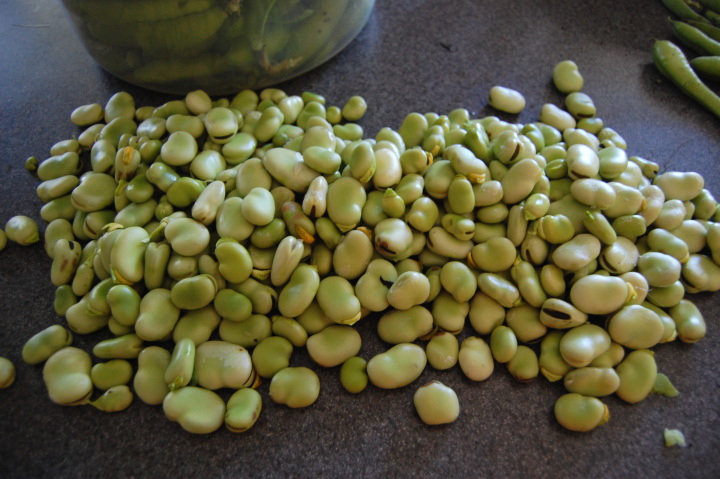
This is the remainder of my fava bean harvest. I probably could have gotten some more beans out of the plants but I needed to make room for the tomatoes, so I picked the rest of the crop yesterday and pulled up the plants for my compost.
Because they put nitrogen into the soil, farmers use favas as cover crops. Favas are a cold-season crop and take a long time to produce beans. The plants get about 3 feet tall and don’t produce a ton for their size. I planted nine plants and harvested about 100 bean pods altogether.
The beans themselves are full of protein and quite delicious, especially when fresh. However, they are also labor intensive. Not only do you have to shell them from their pod, but each bean is surrounded by a bitter membrane that you have to remove. To do this, I popped them in a pot of boiling water for two minutes so that the membranes loosened. The inner bean is a grassy green and very tender:
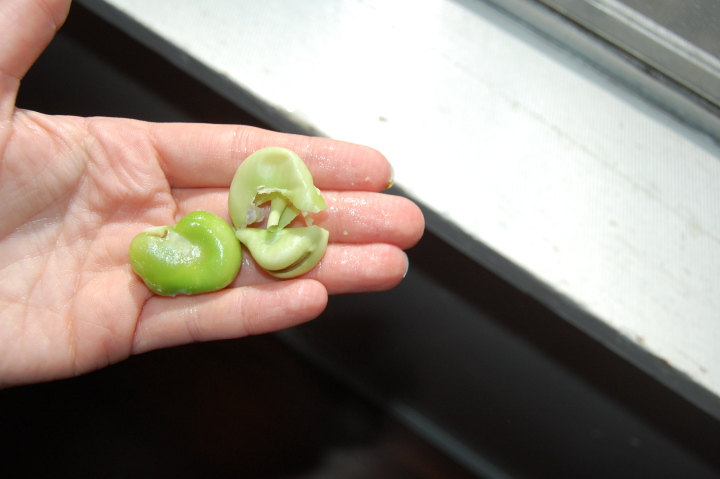
Removing the membranes takes some time, but once you do it you have a pile of lovely beans that you can put in a salad or serve as a side dish. I made some for dinner last night. After removing the membranes, I pan-fried them with some oil, garlic, basil, salt, and pepper, like so:
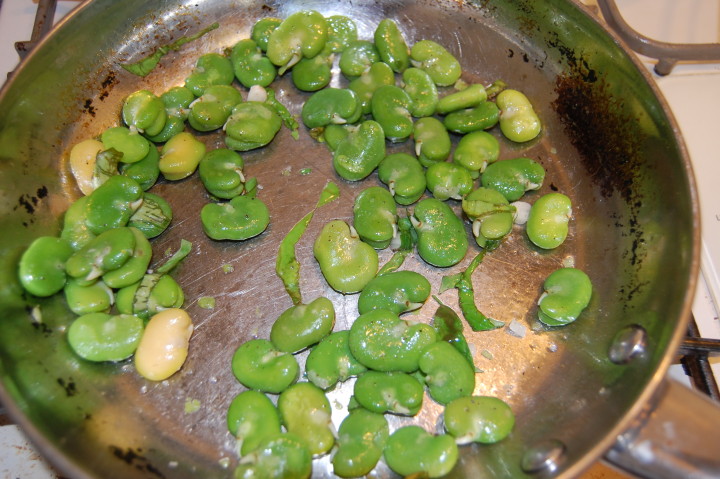
Since the pan frying was only about heating the beans and adding flavor, the whole thing took about 5 minutes. The end result was a delicious, pillowy bean, kind of like a cross between a green bean and a potato. And because everything except the oil and spices came from my garden, the cost of making this side dish was around $.10.
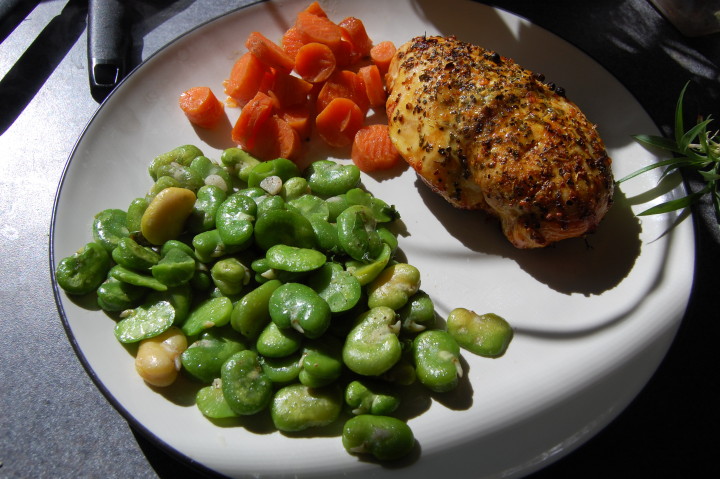
Planting favas was an interesting experiment. While I wouldn’t bother with them if they were springtime plants, since they can be planted in the winter, they are a nice way to put your garden to use in the cold months. I will probably plant them again.

Is that pork? BTW – You are a great cook.
Chicken breast. Thank you!