
We tried making apple cider and it was easy. All it took was putting the apple juice in a big bottle with brown sugar and yeast, letting it ferment, and then bottling it. It made a light, delicious drink with an alcohol content of around 6%.
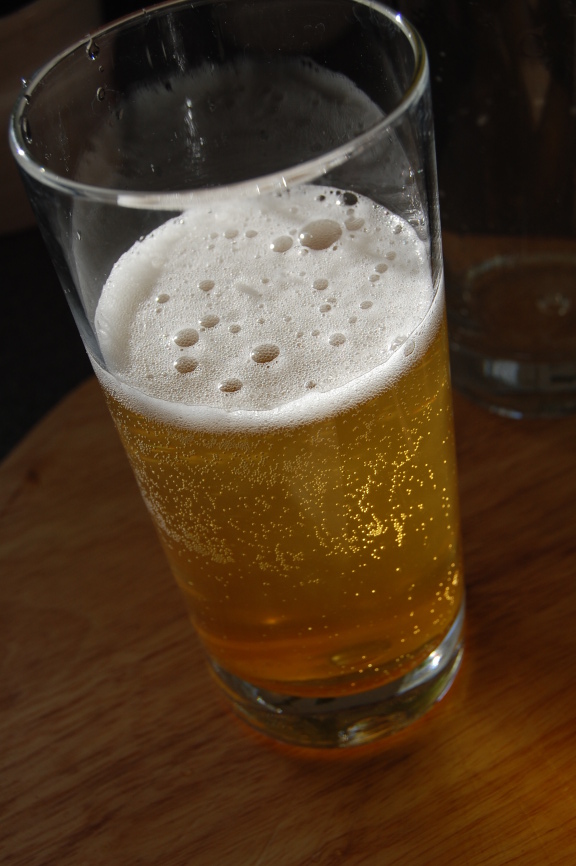
We ended up with 42 bottles of cider. The total cost, not counting the equipment–which we reuse for all beer making–was $16.78, or $.40 a bottle. Here’s how we did it.
How To Make Apple Cider
Equipment:
- 5 gallon carboy/food-safe bucket for fermentation
- 1 airlock
- A second bucket (any sanitized bucket will do) Racking cane
- Siphoning hose (a clear vinyl tube like they have at the hardware store)Bottling wand
- Bottles (My husband got them for free by asking people at work to save bottles for him)
- Bottle caps
- Capper
Ingredients
- 4 gallons apple juice + 48 oz of apple juice for bottling ($15.50 at Costco. Be sure that your juice doesn’t have any preservatives apart from citric acid as it could prevent fermentation.)
- 1/2 lb brown sugar ($.50)
- 4 g Epernay II wine yeast (10 g vial $1.95—this can be purchased in a beer store or online.)
Directions:
1. Clean and sanitize all the equipment. I’m assuming you know how to do this—just keep in mind that it’s essential that everything that touches the cider be sanitized (including your hands).
2. Now, you need to put all the apple juice and brown sugar into the fermenter (bucket or carboy), but first we need to dissolve the brown sugar. To do this, we shook it with the cider before putting it in the fermenter. Our apple juice came in four one-gallon bottles for a total of four gallons. We took the first bottle of juice and poured half of it into the fermenter. Then we added about a quarter of the brown sugar into the half-empty apple juice bottle. We put the cap on and shook vigorously until all the sugar was dissolved. Then we transferred the juice/sugar into the fermenter and repeated with the other three bottles until everything was in the fermenter.
After that, add the 4 grams of yeast to the fermenter.
You have just made the apple cider. Really, that’s all the heavy lifting you’ll have to do until bottling.
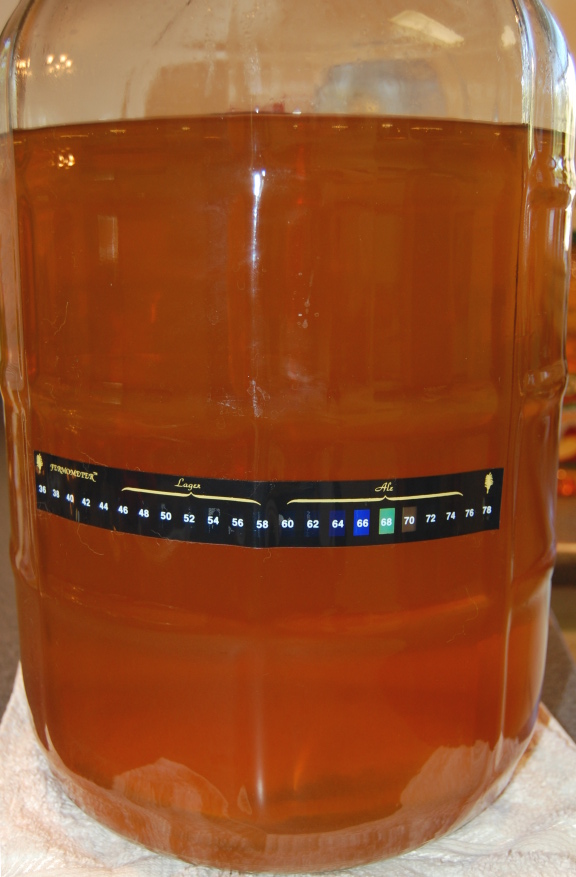
(Unfermented apple cider in the carboy)
3. Now it’s time to ferment. Put the airlock on the cider and store it somewhere it can stay at around 68-72 F. We used the guest bathroom. After a day or so, the yeast will start working and bubbles will rise to the surface of the cider. The airlock should start bubbling as well.
After 3 weeks, the fermentation should be complete. The yeast should have settled at the bottom of the fermenter and the cider will be as clear as the original juice again. The cider is ready to be bottled.
4. If you want the cider carbonated, you need to add some sugar to wake up the yeast again. While you could use 4 oz of normal sugar, we used more apple juice since juice has sugar in it. It turns out that 48 oz of apple juice contains 4 oz of sugar.
To add the apple juice to the cider, first pour the juice into your second bucket.
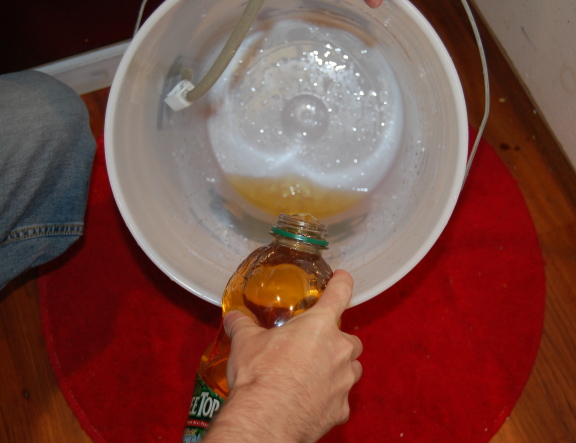
(Apple juice being added to the bucket)
Using a racking cane and siphoning hose, siphon all the cider out of the fermenter into the bucket to mix in the juice. The mixture should be stirred up enough just by the siphoning to distribute the sugar evenly.
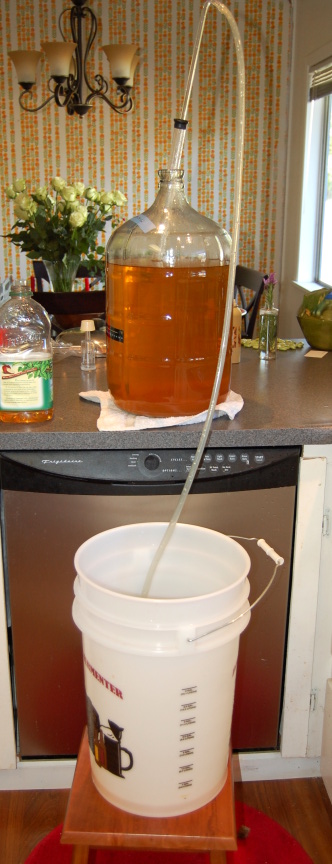
(Cider being siphoned from the fermenter into a bucket containing the apple juice)
5. Now we bottle. First, sanitize all the bottles. Either fill each bottle with a sanitizer solution and then dump it out or use the sanitize option on your dishwasher. Just don’t use any soap because it will leave film in the bottles.
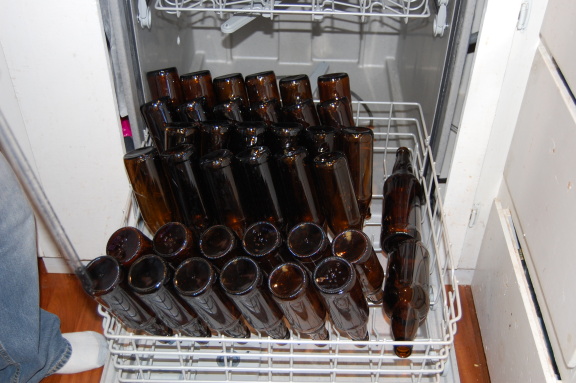
(Sanitized bottles fresh from the dishwasher)
Bottling is messy, so we use a dishwasher to catch spills. Put the bucket above the dishwasher and using the racking cane and siphoning hose again, start filling each bottle with the cider.
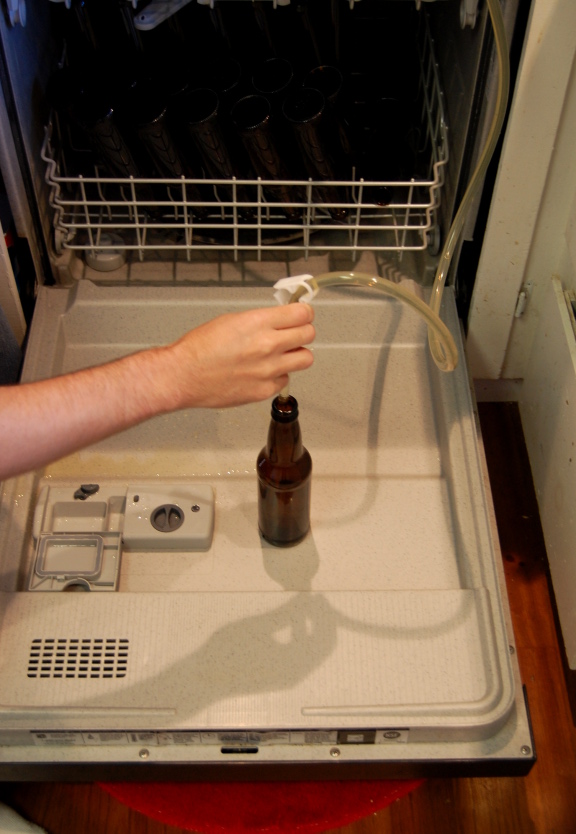
(Apple cider being bottled with a siphoning hose)
6. Cap each bottle using a bottle cap and a capper.
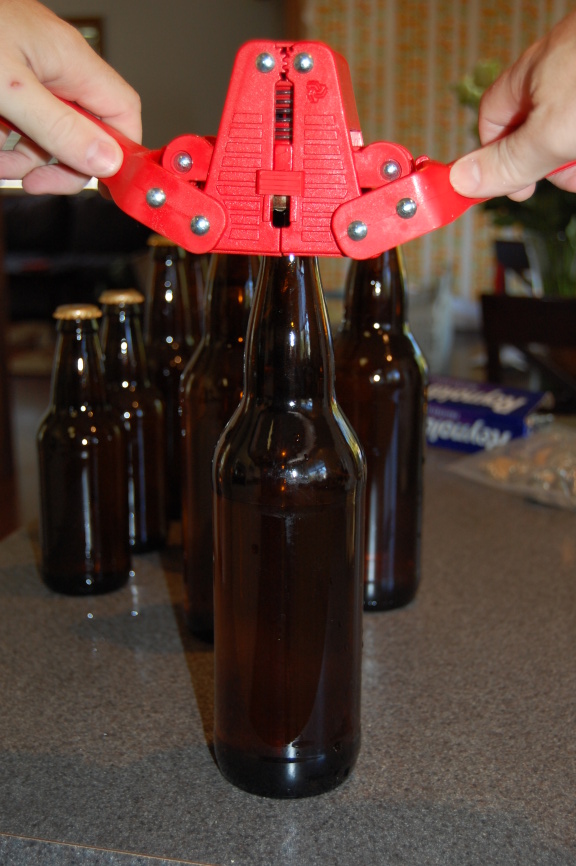
(Apple cider being capped)
7. Once all of the bottles have been filled and capped, store them at room temperature for another 2-3 weeks. After a week you might want to take one bottle, chill it, and gauge how the carbonation is going. It took us 2 weeks to have fully carbonated apple cider.
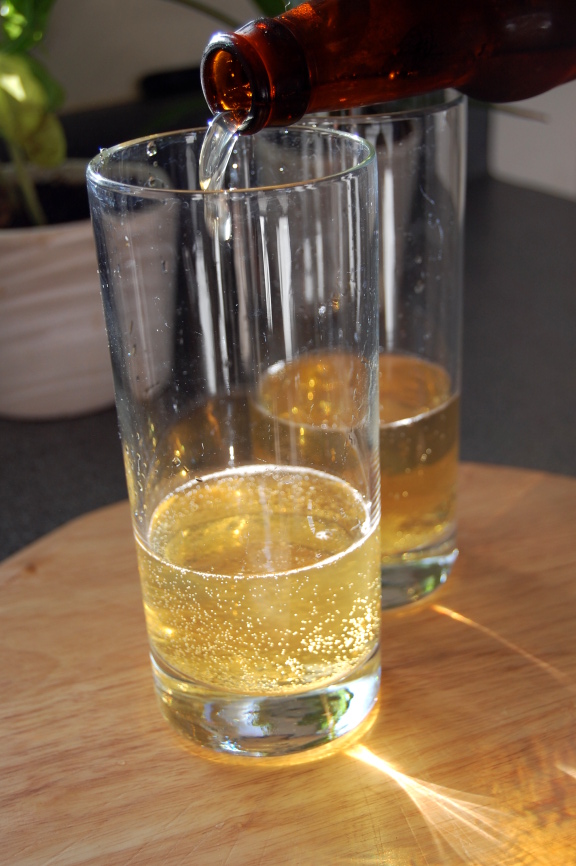
The end result will be perfect on hot afternoons all summer long.
That is so incredibly cool. Where do you buy all the brewing stuff?
Hi Katie. Thanks! We bought all our equipment from The Beverage People, which is near my house, but also has an online shop: http://www.thebeveragepeople.com/ .
Cool – I’ll have to try this. The tip on bottling on the dish washer was great – I could have used that when bottling my Saison last weekend.
Can you do this with other fruit juices, like cherry, raspberry or pomegranite?
Thanks for posting this! I have never done any type of brewing before but I am going to try this, I already ordered some of the equipment.
The only thing I have a question about is when you add the yeast do you just add it or do you mix it in?
Chris, yes, you can use most juices, afaik. That’s how they get cherry wine and drinks like that. I’m thinking of trying pear juice sometime in the future. (I don’t know if citrus works though–seems like the acid would kill the yeast.)
Rob, great to hear you’re giving it a try. We just added the yeast on top. No need to mix it in.
For the record, I used TreeTop Apple Juice–regular juice, not cider.
Hello, so your telling me that making this apple cider is like making the alcoholic drink “Woodchuck”??? the apple cider drink that you can buy in stores? 6% alcohol per bottle? if so that’s incredibly easy and AWESOME!!
I can;t wait to try this, Ive been interested for years. This is the simplest, most easy to understand, directions ‘ve ever seen and it addresses all aspects from start to finish.
I’m glad you guys like it!
This is great stuff. Thanks for the instructions. I have a quick question. After I bottle the cider and the carbonation is underway, what prevents the yeast from using up all the newly added sugar and tasting “not so sweet”?
Chris, I asked me husband. Here is what he said:
“The yeast *will* eat all of the added sugar, which is why you only add enough sugar for carbonation. If you want, you can “backsweeten” the cider with unfermentable sugars such as lactose or some people even use Splenda. Basically if you want the yeast to naturally carbonate the bottle and you want the cider to have some sweetness, you will have to add an unfermentable sugar at bottling time along with your sugar for carbonation.
If you add too much fermentable sugar at bottling time, the yeast will eat all of it and you risk a “bottle bomb” as the pressure builds.”
Hope that helps.
How do you keep the sediment out of the cider when you siphon it into the bucket? If you keep the hose off the bottom, isn’t some wasted? Or, can you filter out the remaining with a cofee filter or something?
Dennis–“You siphon the cider with a racking cane designed for siphoning beer and cider. It is designed to siphon fluid about an inch from the bottom so it doesn’t pull up much sediment. It doesn’t waste much either.
You will always get a bit of sediment in the bottom of cider once the yeast that are still suspended in the cider settle out in the bottle once they are done carbonating it. This is normal and is just a byproduct of unfiltered beer or cider. Besides the racking cane, if you just wait until your cider looks clear in the carboy before you bottle it, you’ll end up with less sediment in the bottle and more left behind in the carboy. It’s okay to leave a little cider (say a half an inch) in the carboy to avoid sucking up sediment.” — Savvy’s husband.
This is the simplest method I’ve seen for hard cider. I just got my juice, sugar and yeast in my carboy a minute ago. I’m really excited to see how this turns out. I plan to “dry hop” it with some cinnamon and nutmeg. It’ll go great with Thanksgiving dinner.
Kenneth, we tried it again with cinnamon, and it was tasty. Good luck!
About 24 hours in and I started to notice a rotten egg/ sulfur smell coming out of the airlock. I did a little research and it seems like I’m getting what some homebrewers refer to as ‘rhino farts’ which is common in fermentation of ciders and lagers. Supposedly the smell should go away in a few days. (I really hope so.)
Ha, yeah Kenneth, that’s normal. It’s an unfortunate part of brewing, but it passes.
I’m going to bottle my first batch tonight. Looking forward to it!
OK, I’ve made a few batches and this stuff is not quite as sweet as ciders like woodchuck,its a little more dry. Overall, very satisfied, thanks guys!
Glad you like it Dennis. If you want is sweeter, you can always add a sweetener that yeast don’t eat, like splenda or lactose.
I made a few gallons of wine with Welch’s concord grape concentrate and it was good, but right now I am on a juice fast and ended up buying a ton of apples. I juiced 16 lbs of apples and it came out to 1 gallon so I am making hard cider with it right now. I hope this turns out good. I have a racking cane that I have never used yet and I’m thinking of getting a 5 gal glass carboy tomorrow. The cider is now brewing in a 1 gallon plastic bottle and I used Lalvin EC-1118 Active Dried Wine Yeast. I also simmered about 2 & 1/2 cups of white sugar into the cider while I was pasteurizing it. Anyway, I’m very new to this but love the whole idea of making my own alcohol. I have been brewing Kombucha mushrooms for 4 years now but I never drink it anymore because I never bottled it. Maybe this will get me more involved with the bottling process as I was just drinking the wine I made right from the gallon jugs I was fermenting it in. Thanks for the tips and advice here.
@Chris:
To ensure the yeast doesn’t consume all of the sugar, most yeasts have attenuating factors. That is, most of the yeast activity will die off during the allotted fermentation time before all the sugar is consumed.
This is monitored when you take your gravity readings before fermentation. For instance, before fermentation you may have a gravity of 1.45 (that’s .45 higher than the density of water caused by sugar). If you have a yeast with 75% attenuation, then your final gravity would be about 1.11.
This allows for 25% of that sugar to remain for “flavor” in your cider. The added sugar at the end of the process is solely for carbonation, and does not add to the flavor of the cider.
I use to make hard cider every year and have a huge party with it.
My recipe was very simple.
5 gal. cider
10 pounds sugar (i used white, but brown would be great)
1x Mc cormic apple pie spice.
1x stick of Cinnamon
pack of champaign yeast. (this is important. I use 10 pounds of sugar and each pound in cider will equal 1% abv on top of the natural 5%. Champaign yeast will allow you to get up to about 13-15% abv.)
You will get to about 13% abv on a bottle doing this wtih the remaining 2 pounds of sugar to keep it slightly sweet. The apple pie spice does amazing things to the flavor and is readily available. The cinnamon stick that you float will give it a bit of a spicy flavor as well. Just be careful as it really is as strong as it sounds alcohol wise. You would never know from the taste either.
Please, i would love if someone gave this a shot as I later discovered drinking is not something i should be doing and would love to see my recipe used again.
-Kyle!
Thanks Kyle! I hadn’t thought of adding apple pie spice before.
How long is the shelf life of the cider once it is bottled?
Thanks
David
Thank you for this article, it is very well written and easy to follow. It inspired me to go get a 5Gal carboy and some Organic Apple Juice and get fermenting!
I have to wonder though, what would be the effect if a magnetic stir plate was below the carboy stirring the liquid gently, allowing more mixture? Would that promote a faster process?
Don’t know how true it is, but I’ve heard you can cheaply make liquor out of hard cider – applejack – by freezing it. Supposedly, the liquid that doesn’t free it the alcohol – applejack.
I get such a kick out of the fact that they named a kids’ cereal after liquor.
Lillian, I think applejack is made by running apple juice through a still, but I could be wrong…
Thank you for this article, the simple instructions really helped me get on my way with it a few years back!
Since the 1st batch I made I kept notes and tweaked things a bit to get what I personally like. I love beer but beer wreaks havoc on my stomach, this stuff goes down great and truly is as refreshing as a good cold ale when made this way. My last batch came out awesome, very dry and crisp, and everyone loves it, my friends call it my Apple Beer. I have been using Nottingham yeast with excellent results, very fruity-ale like finish with it and it flocculates like a brewer’s dream yeast. A couple of other tips others may want to try as I have: a TBSP of yeast nutrient helped to give a full speedy ferment, a Tsp of Tannin helps to make it really “crisp”, and I brew the whole 4.5 to 5 Gal of juice primary, forego the additional juice and just use “carb” bottling drops or corn sugar at bottling. I have avoided additional flavors and spices so far because it is so darn good on its own, but plan to experiment with that in future batches.
Oh and real “backwoods applejack” is traditionally made by freezing your cider at ever decreasing temps and skimming the ice at each interval so only water is removed until what remains is mostly alcohal and the concentrated flavors from the apple juice brew which has a much lower freezing point than plain water. Once in this state it has very concentrated flavors and a high alcohal content like liquor. I have yet to try this on my own but was able to see how an oldtimer did it by letting nature takes its course as his cider froze in stages over the winter months and “skimming” it as needed.
What % abv did you achieve with the original recipe and any subsequent “tweaks”?
Dawn, just make sure everything is sanitized. The alcohol is about 6%.
Does this recipe retain its apple flavor well after fermentation is complete?